Jacksonville, FL

Infectious Disease Disinfection Planning in Jacksonville, FL

What to do, who to contact, and what to ask in Jacksonville.

Illness in your Jacksonville home? See what to clean first from mudroom to Florida room, how humidity changes timing, and what to keep.

Get an email reply about infectious disease disinfection

Send a short message to the follow-up inbox. A coordinator can reply by email. This form does not send emergency help; call 911 first if anyone is in danger.

Tell us what you need help with. Share a short description; please leave out medical details, access codes, and other sensitive information.

A request does not confirm a booking. For immediate danger, contact local emergency services.

Or email info@infectiousdiseasecleanup.online

The short answer for Jacksonville, FL

After an illness at your Jacksonville home, follow the route your family really takes: from the car to the cleat bench, the garage, the screened Florida room and the nearest bath. Ballfield clay and grime have to be washed off before a disinfectant can do its job. Here is how to plan around humidity, shift schedules and visiting relatives.

What to do, step by step

  1. 1

    Trace the hand path from ballfield to porch

    Think about a normal day after a game. Follow the path from the car to the screened porch, the garage fridge and the nearest bath, and write down what gets touched. Then note whether the illness was a stomach bug or a cough. That is all the detail a company needs, and you do not have to give a diagnosis. Share both notes when you call. On a riverside lot or anywhere else, be careful with any company that promises you a sterile house.

  2. 2

    Have clay and sunscreen film washed off first

    CDC's advice comes down to soap before spray. Cleat clay, sunscreen film and bath grime shield germs if the washing is skipped. A good crew scrubs the bench, the latches and the bath first. Then it keeps porch latches and garage remotes damp for the full time on the label. Have those two clock times written on your invoice. You want that record, so a citrus scent on the porch is never taken as the sign of a finished job.

  3. 3

    Plan the empty time around shift changes

    On a big lot with several doors, set one family clock and stick to it. That works better than a rushed buffing before someone leaves for Mayport or downtown. If a shift starts during the wet time, plan for that person to use a different bath and door. A spare bath only counts if it was treated or was never used by the sick person. Afterward, air out the humid Florida room as the safety data sheet says. Fresher air is the aim, not sterile air.

  4. 4

    Keep a records packet for your Duval home

    Store the product names and numbers, the wet-time log, your sketch from porch to garage, and copies of any note you sent to family. If the company swabs a ranch faucet, what you learn about is film on the surface. For questions about illness in the community, Duval's county health office takes calls from residents. Keep the packet where you can find it. A landlord or an insurer may ask later what was done in the garage apartment.

What cleanup is like in Jacksonville

Duval County is spread out, and an illness rarely stays at one address. Your river ranch may share a washer with a garage apartment. Kids track ballfield clay through a screened Florida room that never shows up in photos of the formal den. After someone has been sick, look at the cleat bench, the garage remotes and the bath nearest the screened porch. Those come well before a front parlor nobody used. In Ortega and Arlington, people coming home from evening games often use the side door and skip the foyer, so put that door on your list as well.

In lightning season, the humidity keeps surfaces wet, and it also keeps smells stuck in a closed Florida room. Relatives arriving from the beach towns tend to crack a side door open early, and that can cut the label's wet time short. Let them know when the room reopens before they set out. Cleat bags, beach wraps and porch cushions need washing or bagging for a while, since hard-surface products are not labeled for them. If a ballfield or boating injury left blood on your porch or garage floor, tell the company. Its workers need an OSHA bloodborne pathogen plan.

Navy and port shifts squeeze your choices in a different way than tourist turnovers do elsewhere in Florida. Someone always has to leave for Mayport or downtown at an odd hour. Think about the hose bibs and mudroom switches that get used when people come back from a shift, and add them to the list. CDC's everyday advice still fits your home: remove the grime, then use a product whose EPA label matches the germ. Words about sterilizing devices belong in clinics. They have no place in a text telling family the garage apartment is open again.

What to expect for your type of home

  • River ranches: Cleat benches, garage remotes and the light switches in the Florida room come before the formal den. Tell the company which door your family uses after games, since that is where to begin.
  • Homes with a garage apartment: List the main ranch, the garage apartment and any bath off the screened porch on separate lines. Ask for each to be priced and recorded apart.
  • Homes with porch furniture: Beach wraps and porch cushions are bagged or washed before any product goes on. Ask the company to wait for that, so soft items do not sit next to treated surfaces.
  • Ranch kitchens: Food counters get their own rinse step, which a porch wipe does not need. Have the crew show you the food-surface line on the label before the next meal.
  • Households with visiting relatives: Side-door shortcuts stay blocked until the wet time ends. A note taped to the door, with the reopening hour, saves you from explaining it at the driveway.
  • Homes with a caregiver: The reopening note for a caregiver should be plain. Leave out words like sterile, and state which rooms were cleaned and when they can be used again.

Papers and records to keep

  • A sketch of touched spots in the Florida room, the garage and at the cleat bench
  • What you told the company about the illness, with no one named
  • EPA numbers, plus the germ claims you relied on for the ranch and garage apartment
  • Notes on detergent cleaning of the clay-covered benches and the baths
  • Wet-time start and stop for the garage remotes and the screened-porch bath
  • The family reopening time, tied to shift or school departures
  • Notes on which wraps, cushions and cleat bags were washed or bagged
  • A line listing any shed or unused den that was not treated

Local offices and official help

Common questions in Jacksonville

The sick person stayed in the garage apartment. Does the screened Florida room need treating too?

Only if people, laundry or a shared kitchen linked the porch to the apartment while they were sick. Even with the den unused, the cleat bench, the shared washer and the garage remote may each need scrubbing and a labeled product. A parlor is not cleaner because the apartment smells of cleaner. List each building as in or out. Match the germ claims, and do not treat List N as covering every summer stomach virus.
Can our river lot reopen after one fogger pass in lightning-season humidity?

No. Fogging does not replace washing off grime, choosing a label that matches the germ, or the full wet time. Humid air may help surfaces stay wet. It also traps smells and tempts people to wipe things dry before a shift change. What it does is lower risk on your treated benches, latches and taps. Your air, your cushions and your family are another matter. Keep wet-time records, not claims about scent.

Our household runs on a Navy schedule. How do we describe closed rooms without naming relatives?

Say which rooms or buildings are closed, such as the garage apartment or the screened room. Give the time the product's wet period ends and when the safety sheet lets people back in. Skip names and diagnoses, even among relatives. Cleaning works alongside handwashing with soap and open windows. It cannot promise that nobody else gets sick. Keep the tone kind, because illness is nobody's fault.

What should we keep for a Duval insurer after porch and garage work?

Keep the product names and registration numbers, and the rooms and porch surfaces that were treated. Show how ballfield clay was cleaned off first, the wet times, and what happened to cushions and cleat bags. Add the fresh-air steps and the reopening times. Photos of the prep help. Swab readings, if you have any, only show leftover grime. Skip any certificate that promises a germ-free house, and leave family names out.

After a ballfield weekend, when does blood change the porch cleanup?

It changes when blood or a similar body fluid is on the porch furniture or floor, for instance from a scraped knee or a cut that bled. Describe the mess when you call. Trained staff will wear gloves and goggles, seal the waste and work under OSHA's rules for blood. Without blood, a porch wiped down after a cold just needs cleaning and then a labeled product.

A sick relative rested in our Jacksonville Florida room. How do we clean it?

Wash cushion covers and throws on the warmest safe setting. Wipe the chair arms, tables, door handles and ceiling fan switch with detergent. A product fit for wicker and wood goes on next. Humid air keeps surfaces damp, so let them dry fully before anyone sits down. The screens rarely need disinfecting. If you see mold or mildew on cushions or wicker, clean it as a separate job. It is a common problem in closed Florida rooms.

What do we do with shared coolers and water jugs after an illness on a Jacksonville ballfield weekend?

Empty the coolers and jugs and wash them with hot, soapy water. Rinse them, then disinfect the inside with a product labeled for surfaces that touch food. Rinse again if the label says to. Let them air-dry with the lids open. Reusable water bottles can go in the dishwasher if they are dishwasher-safe. Remind your kids not to share bottles during games. Throw away any leftover snacks that were shared from open bags.

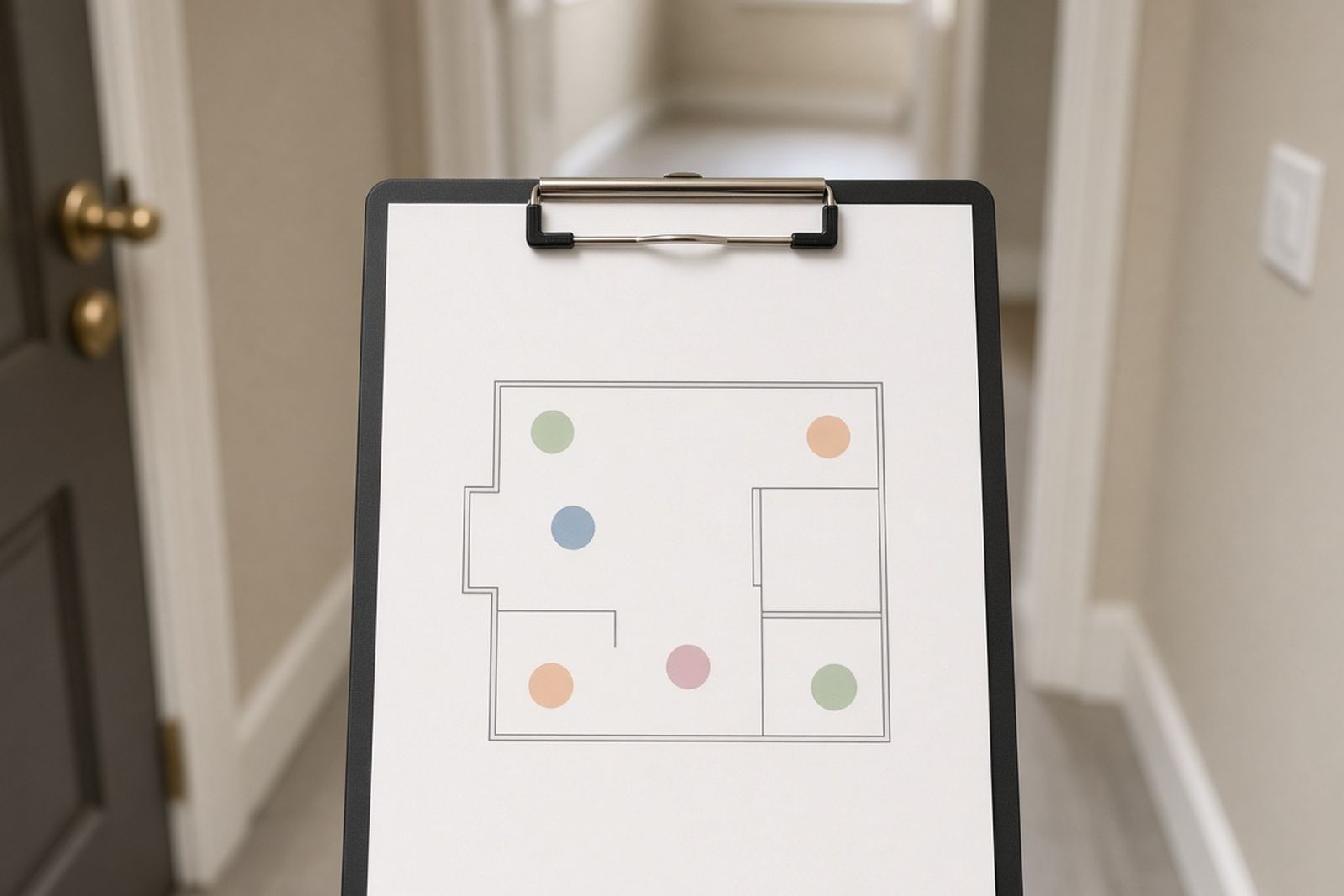
Clipboard showing a room plan with color-coded dots marking high-touch surfaces
Clipboard showing a room plan with color-coded dots marking high-touch surfaces. Illustration only.
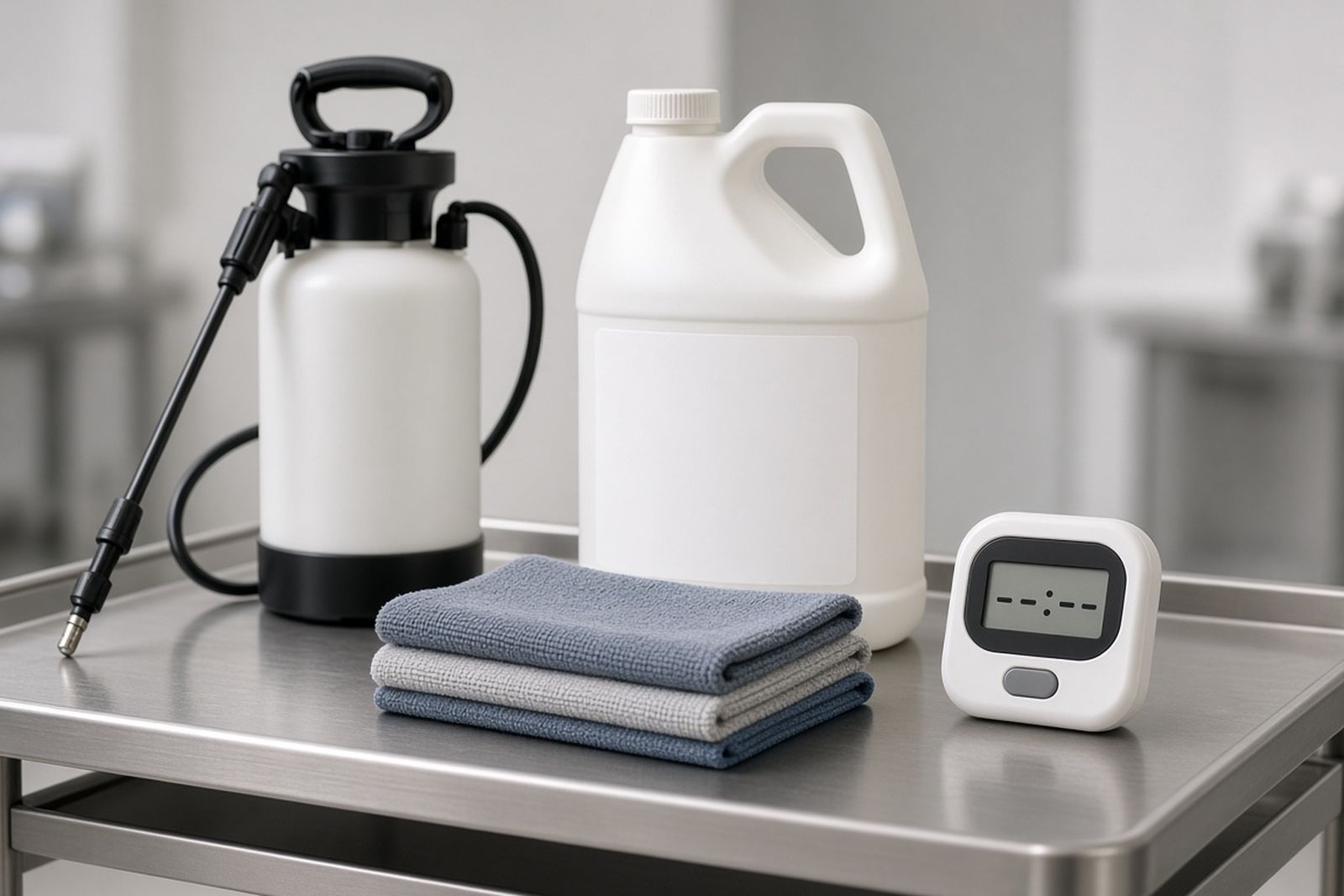
Pump sprayer, disinfectant jug, folded cloths and a contact-time timer on a steel cart
Pump sprayer, disinfectant jug, folded cloths and a contact-time timer on a steel cart. Illustration only.

Facts worth knowing

  • In a lab test published in 2020, hydrogen-peroxide wipes killed more C. difficile spores than the quaternary-ammonium wipes tested.

    Why it matters: Not every disinfectant works well on C. diff, so ask what product will be used in your home or building.

    Source: Nkemngong et al., 2020

  • In a lab test of six commercial wipe products, published in 2020, wiping larger areas with one wipe raised concern about spreading bacteria further.

    Why it matters: If you wipe surfaces yourself, use each wipe on a small area and then throw it away.

    Source: Voorn et al., 2020

  • In one survey of 96 Australian nurses and midwives, staff described confusion about which disinfectant to use after a patient with an infection.

    Why it matters: Ask any cleaning company which disinfectant they will use for your situation and why it works on that germ.

    Source: Mitchell et al., 2021

Tools that help right now

What would you do?

Poll results

Vote to see how other people answered. You can change your answer at any time.

Your experience

When your facility had an illness cluster, how did you handle cleaning?

Be the first to vote
Process

How did you decide whether to close all or part of the facility?

Be the first to vote

Need help in Jacksonville?

Send a short message about the property to the follow-up inbox. A coordinator can reply by email with next steps.

Your request is sent to the follow-up inbox. A coordinator can reply by email.

If anyone is hurt or in danger, call 911 first.